


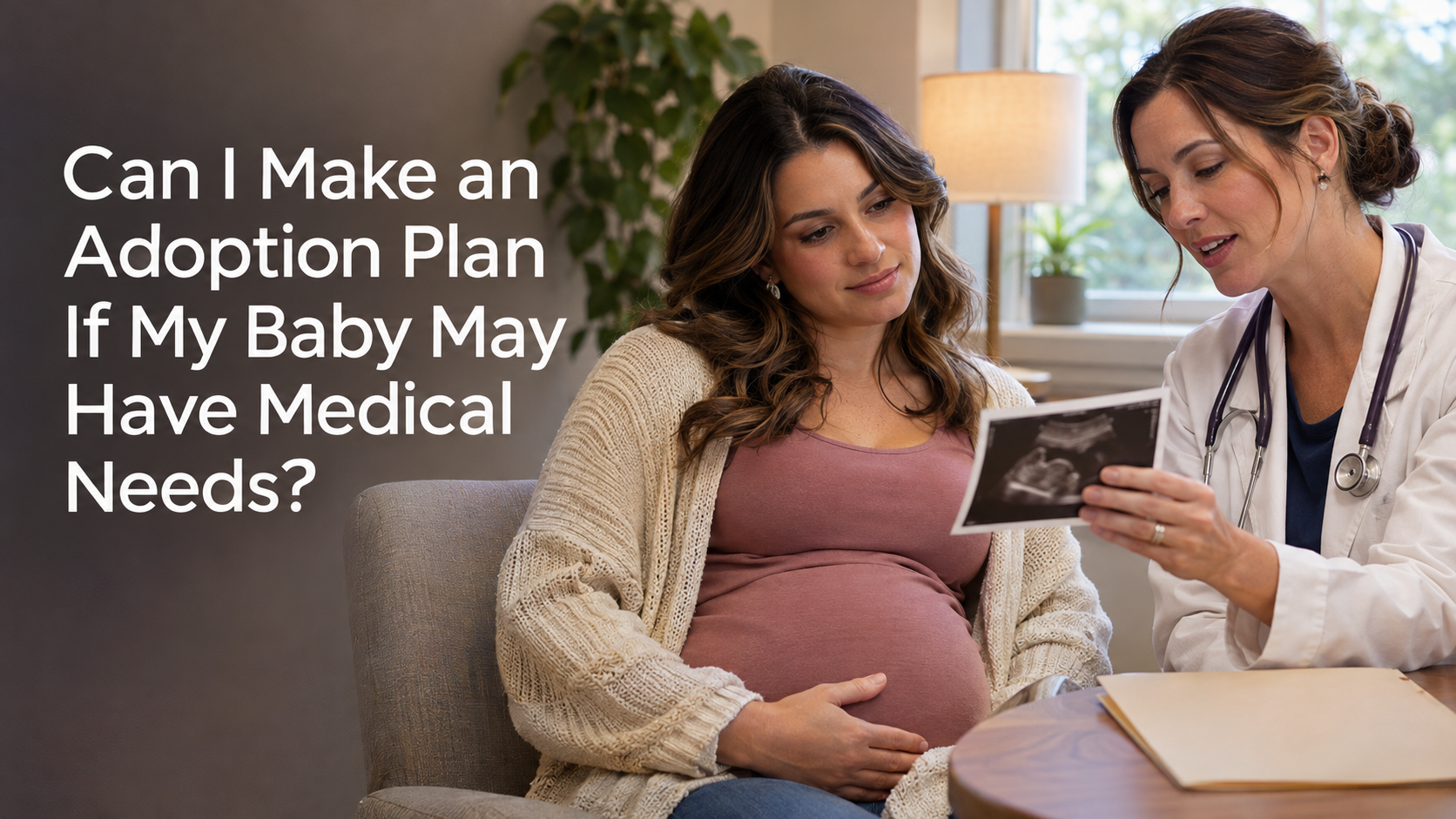
Yes. If prenatal testing suggests that your baby may have a medical condition, disability, genetic difference, or need for specialized care after birth, you can still explore adoption.
You may be feeling frightened, overwhelmed, or unsure what the future will look like. You may have questions about your baby’s health, what care may be needed, whether an adoptive family will be prepared, and whether adoption is still an option.
At Unexpected Blessings Adoption, we believe you deserve compassionate support and honest information. We can help you explore your options, create a plan based on what is currently known, and adjust that plan if new information becomes available.
A possible medical diagnosis does not make your baby less worthy of love, care, or a committed family.
You Do Not Need to Have Every Answer
Prenatal testing does not always provide a complete picture of a baby’s health.
A screening test may indicate that a baby has an increased chance of having a particular condition, but it may not provide a diagnosis. The Centers for Disease Control and Prevention explains that an abnormal screening result is often followed by additional diagnostic testing.
Even after further testing, doctors may not be able to predict exactly how a condition will affect a child. Some medical needs may not be identified until after birth.
You do not need to understand every diagnosis or know precisely what the future holds before contacting us.
We can begin with the information you currently have and work with medical and legal professionals as the situation develops.
A Possible Diagnosis Does Not Require an Immediate Adoption Decision
Receiving unexpected medical information during pregnancy can be emotionally overwhelming. You may feel pressure to make decisions before you have had time to understand what the information means.
You are allowed to slow down.
You can ask your medical provider:
- Is this a screening result or a confirmed diagnosis?
- What additional testing is available?
- What are the possible outcomes?
- What care might my baby need immediately after birth?
- Will I need to deliver at a hospital with specialized services?
- Could my baby need surgery?
- Is a neonatal intensive care unit stay expected?
- Can I speak with a specialist or genetic counselor?
- What information is still uncertain?
You can also take time to explore parenting resources and adoption. Learning about adoption does not obligate you to choose it.
We will not expect you to make a permanent decision during your first conversation with us.
Can an Adoptive Family Be Prepared for Medical Needs?
Potentially, yes.
Some prospective adoptive families are open to adopting a baby who may need specialized medical care. A family’s level of preparation can vary based on:
- The type of medical condition
- The amount of information available
- The family’s experience
- Access to specialists and hospitals
- Insurance coverage
- Work schedules and available leave
- Financial stability
- Support from extended family
- Comfort with uncertainty
- Ability to provide long-term care
We will talk with prospective families carefully about what is known and what remains uncertain.
The goal is not simply to find a family willing to say yes. The goal is to find a family that understands the available medical information, has considered the responsibilities involved, and feels prepared to care for your child.
You Can Ask Questions About a Family’s Preparation
If you decide to explore adoption, you can ask prospective adoptive families how they would care for a child with medical needs.
Questions might include:
- Have you cared for a child with medical needs before?
- Do you live near a children’s hospital or appropriate specialists?
- What health insurance would cover the baby?
- Are you able to take time away from work?
- Who would help you during hospital stays or recovery?
- Are you comfortable attending frequent medical appointments?
- How would you learn about a diagnosis you have not encountered before?
- Are you prepared for the possibility that the baby’s needs may be greater than expected?
- How would you support the child emotionally as they grow?
- Would you keep me informed about the child’s medical care?
You are not being difficult by asking detailed questions. You are gathering information that can help you decide whether a family feels right for your baby.
Medical Information Should Be Shared Honestly
It is important to provide accurate information about your pregnancy, medical history, medications, prenatal care, test results, and known family medical history.
You should not feel ashamed or afraid to share information.
Adoption professionals and prospective adoptive families need accurate details so they can prepare for the baby’s care. This may include information about:
- Prenatal diagnoses
- Abnormal screening results
- Ultrasound findings
- Genetic testing
- Prescription medications
- Mental health treatment
- Substance exposure
- Previous pregnancy complications
- Family medical history
- Expected premature delivery
- Recommended specialists
If you do not know part of your medical history, say that you do not know. You are not expected to provide information you do not have.
Honesty helps the medical team, adoption professionals, and prospective family make appropriate plans. It should not be used as a reason to shame or judge you.
What If My Baby Is Born Prematurely?
A premature birth can happen unexpectedly, even when there were no major concerns earlier in pregnancy.
Some premature babies need only a short period of additional monitoring. Others may need specialized care for breathing, feeding, growth, infection prevention, or underdeveloped organs.
The National Institute of Child Health and Human Development explains that many premature babies receive care in a neonatal intensive care unit, often called the NICU. The length and type of care depend on how early the baby was born and the baby’s individual health.
If your baby is born prematurely, an adoption plan can often continue, but it may need to change.
We may need to coordinate with:
- Hospital social workers
- NICU nurses and physicians
- Your attorney
- The prospective adoptive family
- The adoptive family’s attorney
- Insurance providers
- Specialists involved in the baby’s care
A longer hospital stay does not automatically prevent adoption. It may simply require additional planning, communication, and patience.
What Happens If My Baby Needs NICU Care?
If your baby is admitted to the NICU, the hospital’s medical team will make decisions about treatment based on the baby’s condition.
You remain the baby’s parent until the appropriate legal consent and custody steps have been completed. The exact roles of the expectant mother, prospective adoptive family, agency, and attorneys can depend on where the adoption process stands.
Before placement, you may be able to:
- Visit your baby
- Receive medical information
- Speak with doctors and nurses
- Hold or touch your baby when medically permitted
- Participate in appropriate care
- Take photographs
- Ask questions about treatment
- Spend private time with your baby
The prospective adoptive family may also be involved if you want them to be and the hospital permits it.
We can help communicate with the hospital and prospective family so everyone understands the plan and respects your role.
You Still Have Choices at the Hospital
A medical concern does not erase your wishes for labor, delivery, or time with your baby.
You can discuss preferences such as:
- Who you want with you during labor
- Whether the prospective adoptive family should be present
- Whether you want private time after birth
- Whether you want photographs or keepsakes
- Whether you want to hold your baby
- Who should receive medical updates
- How you want communication handled
- What support you need while the baby is hospitalized
Medical circumstances may affect what is physically possible, but your feelings and preferences still matter.
You should not be made to feel that the baby’s condition means you must step aside immediately.
What If the Diagnosis Changes After Birth?
Sometimes a prenatal concern is less serious than expected. In other cases, doctors may discover additional medical needs after the baby is born.
An adoption plan may need to be adjusted if:
- A suspected diagnosis is ruled out
- The baby needs unexpected surgery
- The baby is admitted to the NICU
- The hospital stay is longer than expected
- Additional specialists become involved
- Long-term care needs become clearer
- The selected family no longer feels able to proceed
We will help you understand what is happening and discuss the available options.
A change in medical information does not mean you have done anything wrong. It means the plan must respond to the baby’s actual needs.
What If the Adoptive Family Changes Its Mind?
This is a painful possibility to consider, but it is important to discuss honestly.
A prospective adoptive family may realize that they are not prepared for the level of medical care a baby needs. While this can feel like rejection, it is better for a family to be honest than to accept responsibilities they cannot manage.
If a family decides not to proceed, we can help explore other prospective families who may have the experience, resources, and willingness to care for the child.
You should not be blamed for the baby’s diagnosis or pressured to make a rushed decision because a match changes.
Your baby deserves a family that is prepared to provide appropriate care. You deserve support while determining what happens next.
Can I Choose Parenting Instead?
Yes.
Exploring adoption does not take away your right to consider parenting. You can ask about medical resources, insurance, hospital support, early intervention, disability services, and community programs that may help you care for your child.
You may want to ask the hospital social worker or case manager about:
- Medicaid or other health coverage
- Early intervention programs
- Home nursing services
- Medical equipment
- Transportation to appointments
- Supplemental nutrition programs
- Disability benefits
- Parent support groups
- Respite care
- Specialists near your home
You deserve information about both parenting and adoption.
Our role is to help you make an informed decision, not to decide for you.
What If I Feel Responsible for My Baby’s Medical Condition?
Many expectant mothers blame themselves when a prenatal test raises concerns or a baby is born with medical needs.
You may wonder whether something you ate, a medication you took, an appointment you missed, or something that happened before you knew you were pregnant caused the condition.
Please discuss these concerns with your medical provider. Many medical conditions have complex causes, and some have no clearly identifiable cause.
You deserve factual medical information rather than assumptions or self-blame.
Regardless of how a condition developed, you still deserve compassionate care. Your baby still deserves to be valued as a whole person, not reduced to a diagnosis.
What If I Am Afraid No Family Will Choose My Baby?
This fear can be deeply painful.
A medical diagnosis does not mean your baby is unlovable or unwanted. Some families are specifically open to children who may need additional medical care, and others have personal or professional experience that helps them feel prepared.
We cannot promise that every situation will be simple or that a match will happen immediately. We can promise to treat you and your baby with dignity while exploring available options.
We will not describe your child as a burden. We will talk honestly about the baby’s possible needs while recognizing the child’s value, personality, relationships, and future.
You May Experience Complicated Emotions
Considering adoption is emotional under any circumstances. Medical uncertainty can add fear, guilt, grief, confusion, and pressure.
You may feel:
- Protective of your baby
- Afraid of making the wrong decision
- Worried that others will judge you
- Grateful for a prospective family
- Angry about the diagnosis
- Relieved that specialized care may be available
- Sad that the pregnancy is not unfolding as expected
- Uncertain about whether to parent or choose adoption
- Hopeful and frightened at the same time
None of these emotions makes you a bad mother.
You are responding to a difficult and uncertain situation. You deserve time, support, and room to process what you are learning.
Frequently Asked Questions
Can I place a baby with medical needs for adoption?
Yes. A baby’s medical condition does not automatically prevent an adoption plan. The agency will need to understand the available medical information and identify a prospective family that feels prepared for the baby’s needs.
Do I have to wait for a confirmed diagnosis before contacting an agency?
No. You can contact us when a screening raises concerns, while additional testing is underway, or after a diagnosis. We can begin discussing your options based on what is currently known.
Can I choose the adoptive family?
Yes. You can review prospective families, ask questions about their preparation, and decide whether a family feels right for your baby.
Will the adoptive family receive my medical records?
Relevant medical and family-history information is generally shared through the appropriate adoption and legal processes. We will explain what information is needed and how it will be handled.
What if my baby needs surgery after birth?
The adoption and hospital plans may need to be adjusted. Medical providers, attorneys, the agency, and prospective family can coordinate care and determine who can make decisions at each stage of the process.
Can I visit my baby in the NICU?
Before your parental rights have been legally addressed, you remain the baby’s parent. Hospital policies and the baby’s medical condition may affect visitation and physical contact, but you can discuss your wishes with the medical team and adoption professionals.
What if the selected family is no longer comfortable proceeding?
Tell us immediately about any concerns. If the family decides not to continue, we can discuss other prospective families and the options available to you.
Can I still choose to parent?
Yes. Exploring adoption does not require you to complete an adoption. You can also ask about medical, financial, and community resources that may support parenting.
Will I have contact with my child after adoption?
You can discuss open or semi-open adoption with prospective families. Contact may include photographs, updates, calls, video chats, or visits, depending on the plan you create together.
Does a medical diagnosis mean I need to decide faster?
No. A diagnosis may require timely medical planning, but it should not be used to pressure you into signing adoption documents or making a permanent decision before you are ready.
Your Baby Is More Than a Diagnosis
Medical language can quickly become overwhelming. Appointments, test results, specialists, and uncertain outcomes may begin to make the pregnancy feel defined by a diagnosis.
We want to remind you that your baby is more than a medical chart.
Your baby is worthy of love, respect, careful planning, and compassionate care. You are also worthy of support as you consider what is best for both of you.
If you are pregnant in Kentucky and concerned that your baby may have medical needs, you can contact our compassionate Kentucky adoption team or call or text us at 502-370-5055.
Speaking with us does not commit you to adoption. It gives you a safe place to ask questions, share what you know, and explore your options without judgment.
This article provides general information and is not medical or legal advice. Please speak with qualified medical and legal professionals about your individual circumstances.