


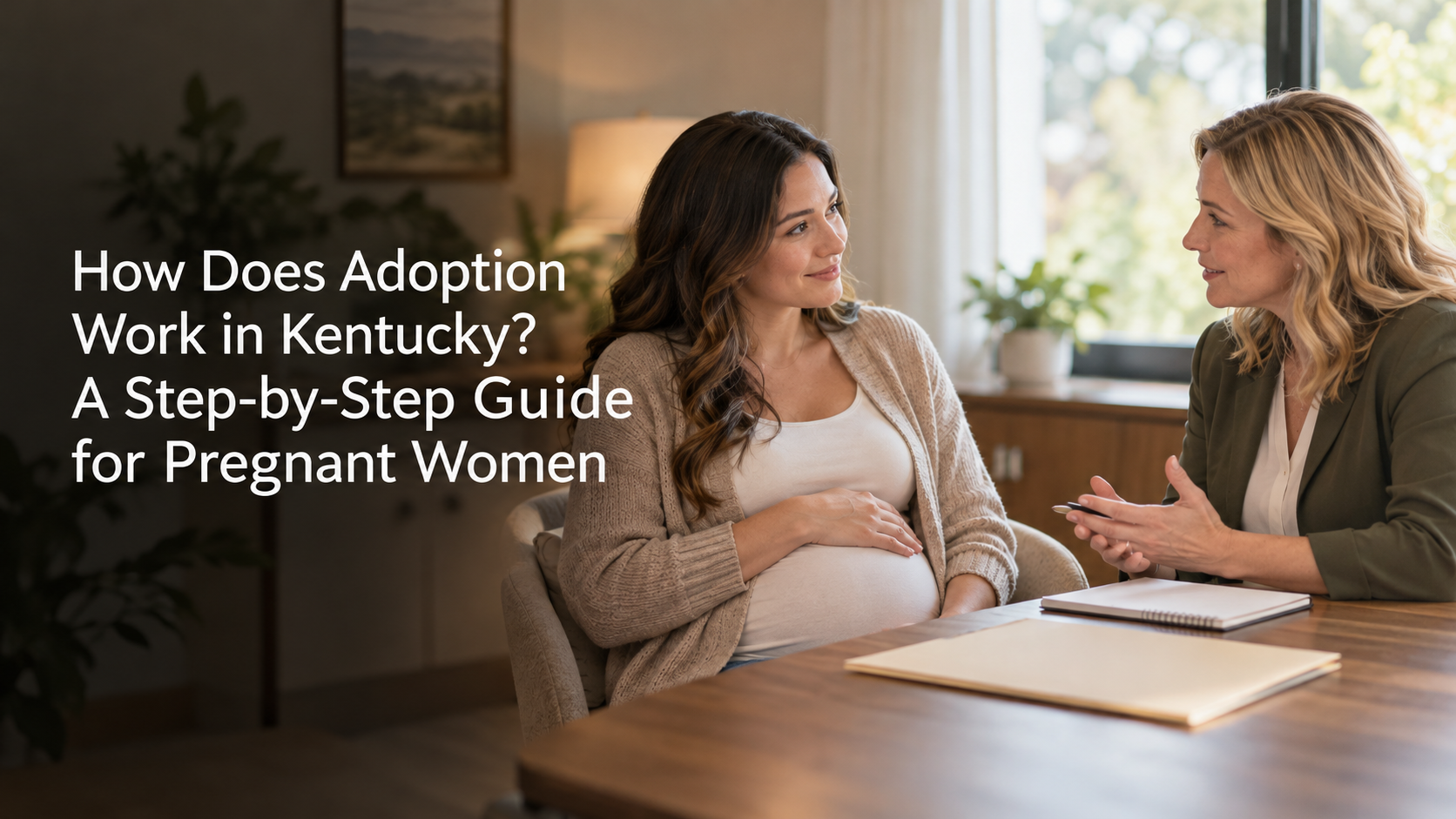
If you are pregnant and considering adoption in Kentucky, you may have many questions about what happens next. You may wonder when you need to make a decision, whether you can choose the adoptive family, what happens at the hospital, or when adoption papers are signed.
You do not need to have all the answers before asking for help. You can learn about adoption, discuss your circumstances, and explore your options without committing to an adoption plan.
At Unexpected Blessings Adoption, we provide compassionate, confidential support to pregnant women throughout Kentucky. We will listen to you, answer your questions, and help you understand each part of the process without judgment or pressure.
Although every adoption is different, the following steps provide a general overview of how private adoption works for pregnant women in Kentucky.
Step 1: Contact a Kentucky Adoption Agency
The first step is simply starting a conversation.
You can contact us by telephone, text, or through our website. You do not need to visit our office before speaking with us, and you do not need to be certain that you want to choose adoption.
During our first conversation, we may ask about:
- How far along you are in your pregnancy
- Where you live in Kentucky
- Whether you are receiving prenatal care
- Whether the baby’s father is involved
- What type of support you currently have
- What questions or concerns are most important to you
- Whether you are experiencing housing, transportation, food, medical, or safety concerns
You can share as much as you feel comfortable sharing. Our goal during this first conversation is to understand your circumstances and help you learn about the options available to you.
Contacting us does not create a contract or obligate you to place your baby for adoption.
Step 2: Explore Adoption and Parenting Honestly
Adoption is a permanent and deeply personal decision. We believe you deserve the time, information, and support necessary to consider it carefully.
We can help you explore questions such as:
- What would parenting look like in your current circumstances?
- What support would be available if you decided to parent?
- What concerns are leading you to consider adoption?
- What type of future do you hope to provide for your child?
- How do you feel about open, semi-open, or closed adoption?
- What kind of relationship would you want with an adoptive family?
- How might adoption affect you emotionally?
Learning about adoption does not mean you have chosen it. You can ask questions, review information, and take time to think.
We explain more about these early conversations on our page about the adoption process for birth parents.
Step 3: Identify the Support You Need During Pregnancy
Pregnancy can bring practical challenges as well as emotional ones. You may be concerned about rent, utilities, food, transportation, maternity clothing, medical care, counseling, or getting to prenatal appointments.
Kentucky law may allow certain reasonable pregnancy-related expenses to be paid by the prospective adoptive parents after you have selected and matched with a family. The assistance available will depend on your individual circumstances, applicable law, and legal review.
Possible assistance may include:
- Affordable housing
- Utilities
- Food
- Maternity clothing
- Transportation to medical appointments
- Pregnancy-related medical care
- Other necessary living expenses
We will explain what assistance may be available and how it works. Financial help should never be used to pressure you into choosing adoption or continuing with an adoption plan.
You can learn more about our support services for birth families.
If you need services outside the scope of our agency, we can also help connect you with community programs and other resources.
Step 4: Create a Personal Adoption Plan
If you decide that you would like to continue exploring adoption, we will help you create an adoption plan based on your wishes.
Your adoption plan can include your preferences for:
- The type of adoptive family you want for your baby
- The values or qualities that matter most to you
- How much contact you want before and after placement
- Your experience during labor and delivery
- Who you want with you at the hospital
- Whether you want the adoptive family at the hospital
- How much time you want to spend with your baby
- Photographs, letters, keepsakes, or other memories
- Communication after the adoption
You do not have to make every decision at once. Your preferences may become clearer as you learn more, speak with prospective families, and consider what feels right for you.
We will listen to what matters to you and help you build a plan that reflects your wishes.
Step 5: Review and Choose an Adoptive Family
In a private adoption, you can have a voice in choosing the family who may raise your child.
You can review family profiles and learn about prospective adoptive parents, including their:
- Family life
- Home and community
- Values
- Parenting approach
- Careers and education
- Extended family
- Traditions
- Hobbies and interests
- Plans for maintaining contact with you
You can ask questions, speak with a family, and meet them if you feel comfortable doing so. You do not have to choose the first family you review.
If a family does not feel right, tell us. We can help you consider other families without judging or rushing you.
You can begin by viewing our hopeful adoptive families.
Step 6: Get to Know the Family You Select
After you select a family and both sides agree to move forward, you are considered matched.
Being matched does not mean the adoption is legally complete. It means that you have chosen a prospective adoptive family and have begun creating a plan together.
Depending on your comfort level, communication before the baby’s birth may include:
- Telephone calls
- Text messages
- Video calls
- In-person meetings
- Attending prenatal appointments together
- Discussing the hospital plan
- Talking about future communication
- Sharing information about yourself and your family
Every relationship develops differently. Some expectant mothers want frequent communication, while others prefer more privacy. We will help you communicate your boundaries and expectations.
You may also change your mind about a match if you realize that the family does not feel right for you. Choosing a family is an important decision, and you should feel comfortable expressing concerns.
Step 7: Prepare a Hospital Plan
Before your baby is born, we will help you think through your preferences for labor, delivery, and your time at the hospital.
Your hospital plan may address:
- Who you want in the delivery room
- Whether you want the adoptive family present
- Who you want to hold the baby first
- Whether you want private time with your baby
- Feeding and newborn-care preferences
- Photographs and keepsakes
- Whether you want the baby to stay in your room
- How you want to leave the hospital
- Whether you want continued contact with the adoptive family during this time
The hospital plan communicates your wishes, but you can change your mind about many personal preferences during your hospital stay.
Giving birth does not automatically transfer your parental rights. You remain the baby’s parent until the appropriate legal steps have been completed.
You deserve to be treated with dignity, compassion, and respect throughout your hospital experience.
Step 8: Give Yourself Time After the Baby Is Born
The hours and days following birth can be emotional. You may experience love, sadness, grief, relief, uncertainty, or several feelings at the same time.
You are allowed to spend time with your baby. You are allowed to ask questions. You are allowed to talk privately with your attorney or support person. You should not feel pressured to sign legal documents before you are ready or legally permitted to do so.
Kentucky law generally provides that a valid adoption consent cannot be signed before 72 hours have passed after the baby’s birth. The consent then generally becomes final and irrevocable 72 hours after it is signed.
You can read the current language in Kentucky Revised Statute 199.500. Because every situation can involve different legal facts, an attorney should explain exactly how Kentucky law applies to your adoption.
Step 9: Address the Birth Father’s Rights
The baby’s biological father may have legal rights that must be addressed before an adoption can be completed.
The necessary steps can depend on circumstances such as:
- Whether you are married
- Whether paternity has been established
- Whether the father is known
- Whether he can be located
- Whether he has provided support
- Whether he agrees with the adoption
- Whether he has taken legal steps to establish parental rights
You do not need to determine the legal outcome yourself. Tell us what you know, and the attorneys involved can determine what Kentucky law requires.
Kentucky also maintains a Putative Father Registry. Any private agency or independent adoption finalized in Kentucky must include a registry search. The Kentucky Cabinet for Health and Family Services provides additional information about the registry.
If the possible father is unknown, cannot be located, or creates a safety concern, tell us as early as possible. We will help connect you with the appropriate legal guidance.
Step 10: Sign Consent Only If You Decide to Proceed
Signing adoption consent is a significant legal step. Before signing, you should understand:
- What the document means
- When it becomes final
- How the revocation period works
- What happens to your parental rights
- Who will have custody of the baby
- What communication has been discussed with the adoptive family
- What support remains available to you
You should have the opportunity to review the documents and ask questions.
Choosing a family, accepting allowable pregnancy-related assistance, or making a hospital plan does not replace the legal consent process. Until the required legal steps occur, the adoption is not final.
If you decide not to proceed before signing consent, tell your adoption professionals and attorney. We can help you discuss the next steps and available resources.
Step 11: Placement and the Legal Process
After the required consent and placement steps are completed, the adoptive family may assume physical care of the baby while the remaining legal process moves forward.
Adoption professionals and attorneys handle much of the paperwork and coordination. The process may include:
- Completing required consent documents
- Addressing the legal rights of the biological father
- Transferring legal and physical custody as permitted
- Completing required reports or post-placement visits
- Filing the adoption petition
- Attending the finalization hearing
If the adoptive family lives outside Kentucky, the Interstate Compact on the Placement of Children, commonly called ICPC, may apply. The adoptive family may need to remain in Kentucky with the baby until both states approve the placement.
We will explain what is happening so you do not feel left out of the process.
Step 12: Receive Support After Placement
Placement does not erase the emotional and physical effects of pregnancy, birth, or adoption.
After placement, you may experience:
- Grief
- Relief
- Sadness
- Pride
- Doubt
- Hope
- Anger
- Love
- Changes in how you feel from one day to the next
There is no single correct way to feel.
Post-placement support may include counseling, birth-parent mentoring, communication assistance, and help navigating important dates or emotional milestones.
If you have an open or semi-open adoption, we can also help facilitate agreed-upon communication with the adoptive family. This may include photographs, letters, updates, telephone calls, or visits, depending on the plan everyone has discussed.
Frequently Asked Questions About Adoption in Kentucky
Does it cost anything to place my baby for adoption in Kentucky?
No. A pregnant woman does not pay agency or legal expenses to place her baby for adoption. Certain reasonable pregnancy-related living expenses may also be available when permitted by Kentucky law and approved through the proper process.
Do I have to decide on adoption before my baby is born?
No. You can begin exploring adoption at any point during your pregnancy, from the hospital, or after your baby has been born. The amount of time available and the specific process may depend on your circumstances.
Can I contact an adoption agency without committing to adoption?
Yes. Contacting us allows you to ask questions and learn about your options. It does not obligate you to choose adoption.
Can I choose the adoptive family?
Yes. You can review prospective adoptive-family profiles and decide which family feels right for your baby. You can ask questions and meet or speak with families before making a decision.
Can I have contact with my child after adoption?
You may create an open or semi-open adoption plan that includes updates or other forms of communication. The type and frequency of contact should be discussed carefully with the adoptive family before placement.
What if I do not know who the baby’s father is?
You can still contact us and explore your options. Tell us honestly what you know and what you do not know. The attorneys involved can determine what legal steps may be required.
When can adoption consent be signed in Kentucky?
Kentucky law generally provides that adoption consent cannot be signed until at least 72 hours after the child’s birth. The attorney involved should explain the timing, documents, and revocation period based on your circumstances.
Will I have to go to court?
The answer can depend on the type of legal process used and the facts of the adoption. Your attorney and adoption professionals will explain whether you will need to appear, what to expect, and how you will be supported.
What if I change my mind while making an adoption plan?
Before legal consent becomes final, tell us and your attorney immediately if you are reconsidering your decision. Choosing a family or creating a hospital plan is not the same as completing legal consent.
You Do Not Have to Navigate Adoption Alone
Understanding how adoption works can make the process feel less frightening, but reading about the steps is not the same as receiving guidance for your specific situation.
We will meet you with compassion, answer your questions honestly, and help you understand your choices. We will not expect you to arrive with a decision already made.
If you are pregnant anywhere in Kentucky and would like to talk privately about adoption, contact Unexpected Blessings Adoption or call or text us at 502-370-5055.
A conversation does not commit you to adoption. It simply gives you a safe place to begin.
This article provides general educational information and is not legal advice. Kentucky adoption law and the steps required can vary based on the facts of each situation. A licensed attorney can explain how the law applies to your individual circumstances.